Beating the Crowd Wave at Humantay
A Humantay guide explains when the shore is quiet, how tour timing creates the late-morning wave, and how to find calm at the lake in any season.
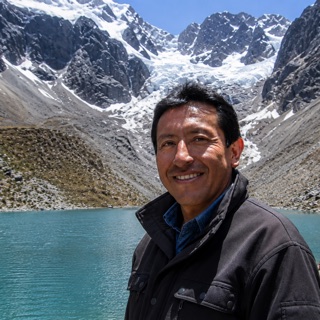 By Carlos Mamani, Humantay Lake tour guide & high-altitude specialist
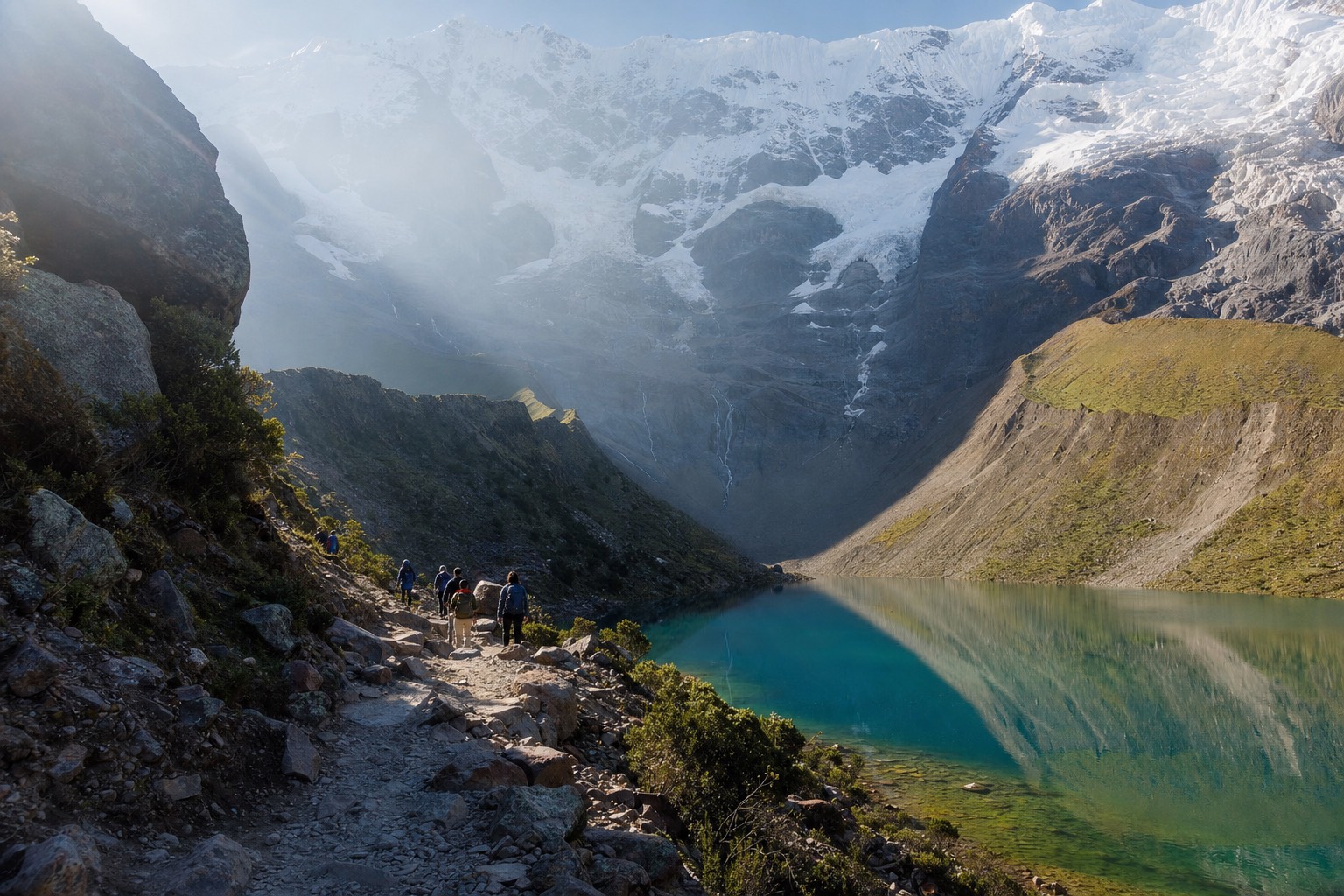
There is a moment on the moraine, most mornings around ten, when I can stand at the lip and watch the day's entire crowd walking up the valley below like a slow, colourful glacier of its own. Twenty minutes later the shore has gone from a dozen people to a hundred. Guests always ask me if Humantay is "too crowded now," and after years of pacing groups up this trail I give the same answer: the lake is not crowded, the lake has a rush hour. Learn its schedule and you can have one of Peru's most photographed places in something close to peace.
Booking choice: Compare the early Cusco departure and the breakfast stop before the climb. Check Humantay Lake dates
Affiliate recommendation · final price and options on GetYourGuide.How the tour schedule manufactures the wave
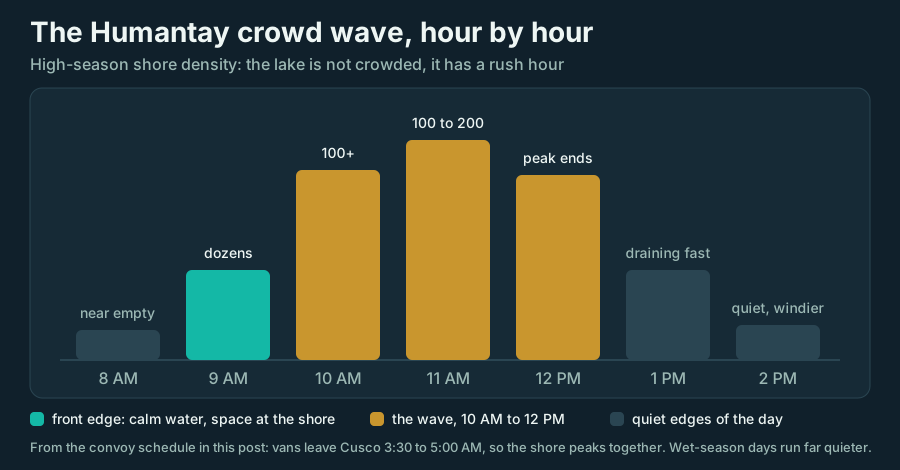
Nearly every day tour leaves Cusco between 3:30 and 5:00 AM, stops in Mollepata for breakfast, and unloads at Soraypampa within the same ninety-minute window. The result is a synchronized crowd that arrives at the shore between roughly 10 AM and noon, and in high season that can mean 100 to 200 people at once.
The wave is not bad luck. It is arithmetic. The breakfast stop, the drive time, and the 1.5 to 2 hour climb are nearly identical for every operator, so dozens of vans that left Cusco within an hour of each other funnel their passengers onto one moraine within an hour of each other too. I watch it from above like clockwork: quiet shore until mid-morning, a building stream on the trail, peak density from ten to twelve, then a slow drain as groups head down for their buffet lunch.
Here is the convoy's day, the schedule almost every van on the mountain is running:
| Stage of the day | Typical clock time | What it means for crowding |
|---|---|---|
| Cusco pickups | 3:30 to 5:00 AM | Your slot here decides everything that follows |
| Breakfast in Mollepata | 5:30 to 7:00 AM | Courtyards fill in shifts; efficient groups leave first |
| Vans reach Soraypampa | 7:30 to 9:00 AM | The trail begins loading from the front |
| Main climb | 8:00 to 10:30 AM | The wave spreads out over the switchbacks |
| Peak at the shore | 10:00 AM to 12:00 PM | Fullest moraine, photo queues at the lip |
| The drain | 12:00 to 1:30 PM | Groups descend for buffet lunch; shore empties fast |
Understanding this changes how you read every "overcrowded" review online. The photos of shoulder-to-shoulder moraine lips are real, and so are the photos of a near-empty shore. Both were taken on normal days, sometimes the same day, two hours apart.
The good news for you: a wave with a predictable schedule is a wave you can surf. The rest of this post is about position, not avoidance, because unless you camp in the valley, you are part of some wave. The trick is riding its front edge.
What an early trailhead start actually buys you
Being among the first groups onto the trail buys you three things: a shore with dozens of people instead of two hundred, calm water before the wind, and the strongest light window for the turquoise. Fifteen minutes of earlier start is worth more than any other crowd tactic.
Every quiet-lake photo I have taken with guests came from the same simple move, being at the front of the wave instead of the middle. The first groups up the trail get twenty to forty minutes of relative calm at the shore before the main mass crests the moraine. That calm window overlaps almost perfectly with the best conditions of the day: still water for reflections, sun newly on the surface, and the vivid mid-morning colour I break down in photographing the turquoise.
| Where you are in the wave | Shore experience | Water and light |
|---|---|---|
| Front edge (first vans in, brisk steady hike) | Dozens of people, space at the shoreline | Calm surface, colour switching on |
| Middle (most groups) | 100 plus in high season, queue for the classic viewpoints | Still good light, busier frames |
| Back edge (late vans, slow starts) | Peak density on arrival, thinning as you stay | Wind often rising, chop on the water |
| After the wave (1 PM onward) | Genuinely quiet again | Cloud and wind risk climbing fast |
This is why the pickup time on a tour listing is strategy, not trivia. A departure that collects you at 3:30 to 4:00 AM sits at the front of the convoy, while the 5:00 AM pickups are structurally condemned to the middle of the wave. I have written with mixed feelings about the 3:30 AM alarm, but this is what it purchases. You are not waking up early to suffer. You are buying position.
Your own legs matter too. The wave spreads out on the climb, so a group that starts walking promptly at Soraypampa instead of dawdling through a long gear faff gains fifteen places before the first switchback. A steady pace beats a fast one at this altitude, and the CDC's high-altitude guidance is firm that racing uphill at 4,000 metres to outrun a crowd is a bad trade. Start early instead of walking fast. It achieves the same thing without the headache.
Dry season, wet season, and the shape of the crowd
Dry season, May through September, brings the biggest crowds and the most reliable turquoise, peaking June to August. The rainy months, October through April, cut visitor numbers dramatically but trade them for mud, cloud, and the real risk of a grey lake. Shoulder months are the quiet compromise.
Crowds at Humantay Lake follow the weather like everything else in the Andes. When the sky is dependable, the vans multiply. When the afternoon rain sets in for the season, they thin out to a fraction, and on some wet-season weekdays the shore never feels busy at all. The catch, and it is a real one, is that the same clouds thinning the crowd can swallow the view; I have stood at the shore in February when the lake was there in theory only, a day I wrote up honestly in the day the lake was grey.
| Months | Crowd level | What you trade |
|---|---|---|
| June to August | Peak. Fullest shore, busiest moraine | Clearest skies, most dependable colour |
| May and September | High but noticeably softer | Excellent weather odds, my favourite window |
| April and October | Moderate | Transitional skies, greener valley, some mud |
| November to March | Light. Weekdays can feel private | Cloud, rain, slippery trail, grey-lake risk |
Day of the week moves the needle less than people hope, since most visitors are travellers rather than weekenders, but Sundays can add Cusco locals in the dry season and holiday weeks fill everything. If a quiet shore matters more to you than guaranteed turquoise, a clear morning in the shoulder months is the best hand the calendar deals.
Booking the front of the wave
You cannot control the convoy, but you can pick your place in it. An early pickup gives the day an earlier start, but traffic, collection rounds and hiking pace determine your actual arrival. Neither a small group nor a pickup time guarantees an empty shore. That single booking decision does more than every on-trail tactic combined.
Group size is the quiet half of this equation. A small group loads its van in five minutes and starts hiking together; a forty-person bus spends half an hour collecting stragglers at every stage, and every one of those minutes slides you deeper into the wave. Small also means the guide can actually manage pace, which is how the front edge is held.
Front of the convoy, hot breakfast included. That is the whole strategy in one booking.
Finding a quiet corner when the wave arrives anyway
Even at peak, the crowd concentrates on perhaps a fifth of the available shore: the arrival point at the moraine lip and the first stretch of shoreline. Walk five minutes along the marked shore path in either direction and the density drops by half or more. Stay on the trail while you do it.
Crowds at viewpoints behave like water finding the lowest point. People stop where they arrive. The moraine lip where the trail crests is a permanent clot of celebration, photo queues, and group huddles, and I understand it completely, that is where the view first lands on you. But the marked path continues along the shore, and fifty metres of it filters out ninety percent of the company. The far ends of the path hold the same turquoise, the same glacier face, and a fraction of the elbows.
The density is never spread evenly, which is the whole opening. Here is roughly how it stacks up along the shore:
| Where you stand on the shore | How busy it gets | The view from there |
|---|---|---|
| The moraine lip, where the trail crests | A permanent clot, photo queues at peak | Where the view first lands, and the most crowded spot on it |
| The first stretch of shoreline | Holds most of the crowd, about a fifth of the shore | Full turquoise, plenty of company |
| Five minutes along the marked path | Density drops by half or more | The same lake, the same glacier, fewer people |
| The far ends of the path | Quietest, up to ninety percent thinner | The same turquoise and glacier face, a fraction of the elbows |
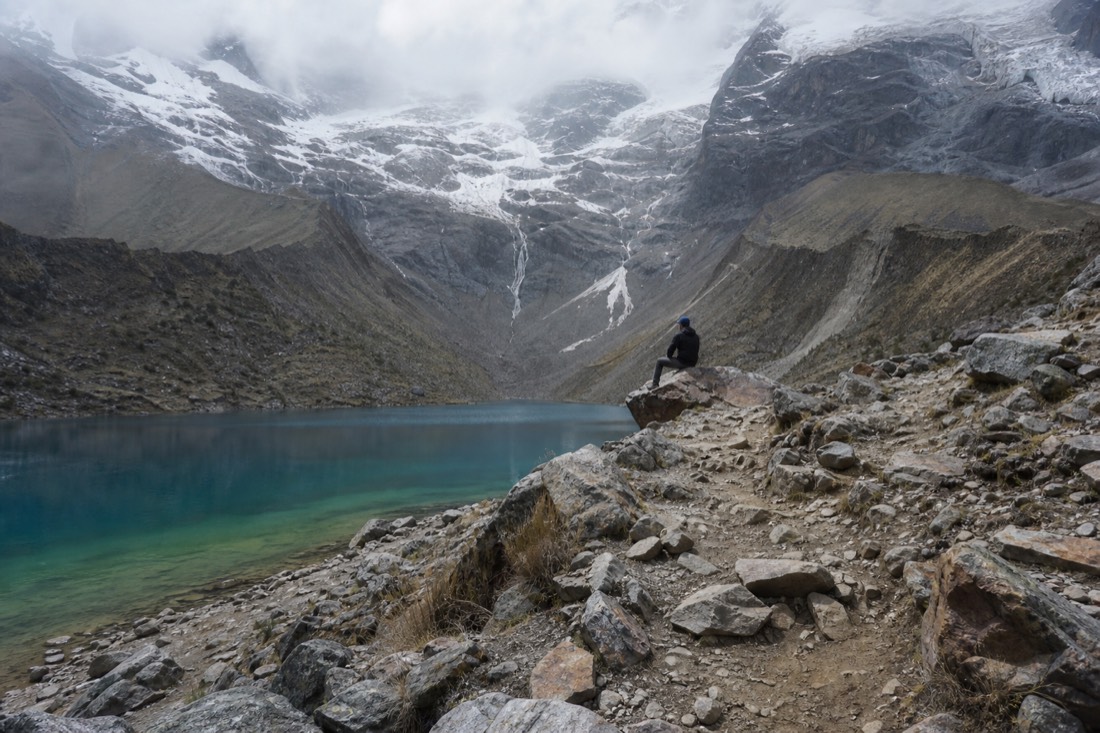
Three rules make the quiet corner work. Stay on the marked path, always; the moraine edges are unstable in places and the shore is part of a sacred, protected site, so the shortcut across loose ground buys you nothing and costs the lake something. Give the apachetas, the stacked stone offerings, respectful space rather than using them as furniture. And never enter or touch the water, which is prohibited both as a sacred site and as a community water source. A quiet corner found within those lines is fully yours. One found outside them is theft, and guides will call it what it is.
Timing inside your own visit helps too. Most groups get sixty to ninety minutes at the lake. Spend the first fifteen away from the arrival clot while everyone else queues for the same photo, then take your own moraine-lip shot near the end of your window as the wave starts draining downhill. The lake at ten past noon, when the vans are calling people down to lunch, can be startlingly close to private.
I will leave you with the thing I tell every group at the briefing. The crowd is not your enemy, it is your schedule. Everyone on that moraine got up at 3:30 in the morning and climbed the same rock you did, and there is something honestly moving about a hundred strangers gasping at the same water. Beat the wave when you can, ride its front edge when you can't, and when it catches you anyway, walk five quiet minutes along the shore path and let the lake do what it has done to every crowd since the first one: shut it up completely.
Your next step
Choose your day from Cusco
Match the trip to your plans
General recommendation · confirm your own requirements
Humantay Lake with breakfast and buffet lunch
Have a date in mind? Let one booking cover the ride to Soraypampa, your guide and both meals. Check your departure before arranging the rest of your trip.
12–13.5 hours · Transport, English/Spanish guide, breakfast and buffet lunch, first aid and emergency oxygen. Entrance fee and optional horse are extra, paid locally in cash.
Choose the historic-center pickup option and confirm your hotel; other options use a meeting point. Downtown Cusco drop-off.
A steep high-altitude hike. Not suitable for pregnancy, mobility or respiratory limitations, vertigo or low fitness. A horse does not remove the walking or altitude requirements. Free cancellation until 24 hours before departure.
Affiliate links: we may earn a commission if you book, at no extra cost to you.