The Best Day Trips from Cusco, Ranked Honestly
Five very different days leave Cusco every morning. A guide who works one of them ranks all of them, with the drive times, altitudes and trade-offs on the table.
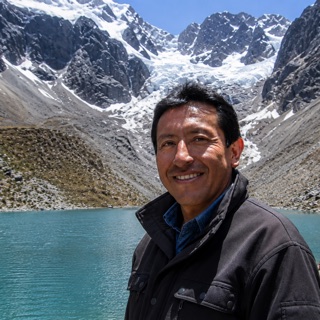 Written with Carlos Mamani, Humantay Lake tour guide & high-altitude specialist
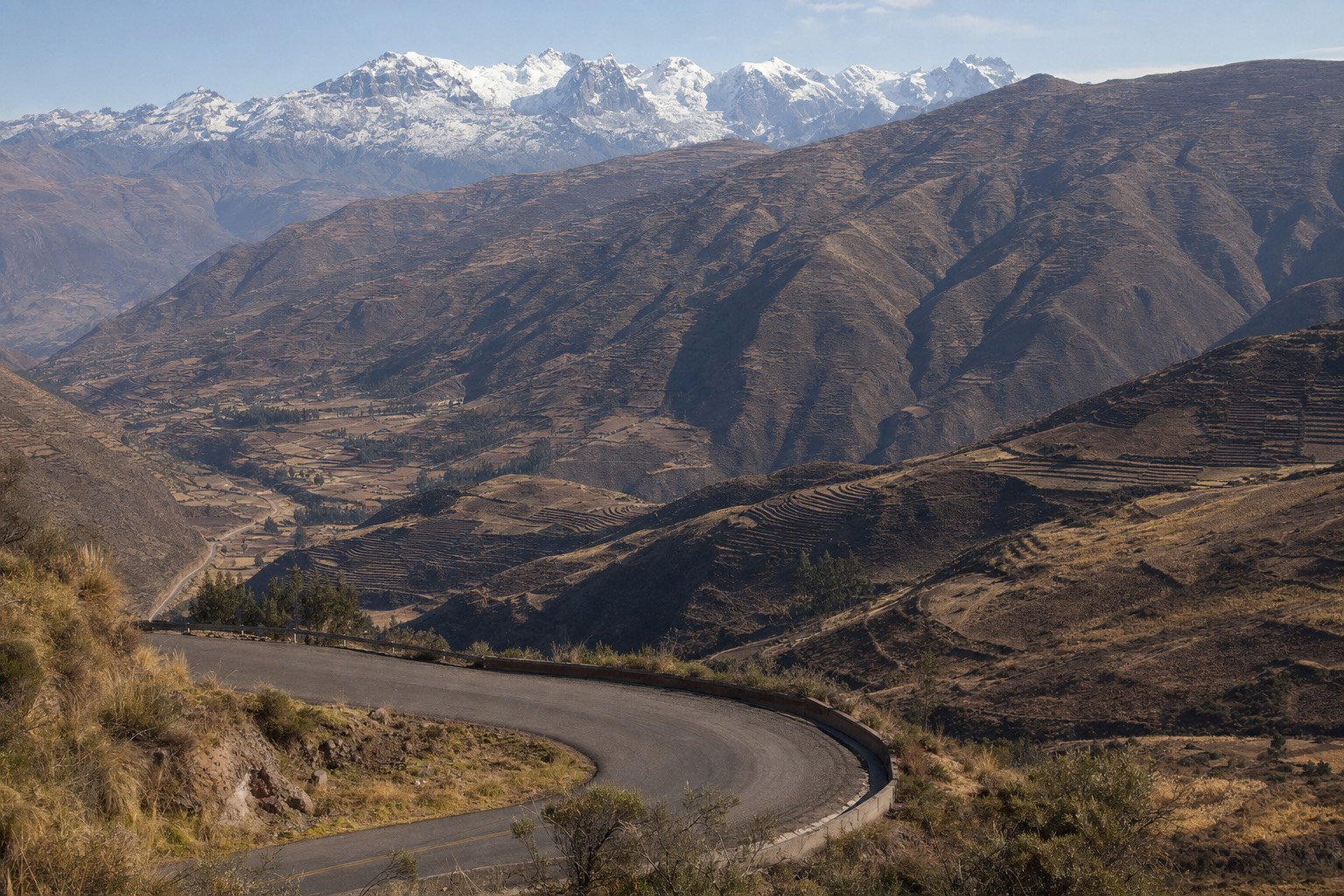
Short answer
Humantay Lake is the strongest single high-altitude day out of Cusco: a real hike, a glacier, and a turquoise payoff. Rainbow Mountain is its higher, harder rival. The Sacred Valley is the best low-effort culture day, Moray and Maras the best half day, and the South Valley the quiet connoisseur pick.
Every morning before dawn, a small fleet of vans fans out of Cusco in five directions. I ride in one of them for a living, the one that goes to Humantay, so let me say that bias out loud before I rank anything: this site exists because of that lake, and I earn my days on that trail. What I can offer in return for your trust is specifics. I have done all five of these trips, some dozens of times, and the honest answer to "which day trip is best" depends on your legs, your acclimatization, and what you want to stand in front of when the drive is over.
Booking choice: Discover the lake hike with breakfast and lunch built in. Check Humantay Lake dates
Affiliate recommendation · final price and options on GetYourGuide.Which day trip from Cusco is actually the best?
For a single unforgettable day, Humantay Lake: a genuine mountain hike with a glacier lake payoff, hard enough to feel earned and short enough for almost anyone acclimatized. Rainbow Mountain rivals it at brutal altitude, the Sacred Valley wins on culture and comfort, Moray and Maras on time, the South Valley on solitude.
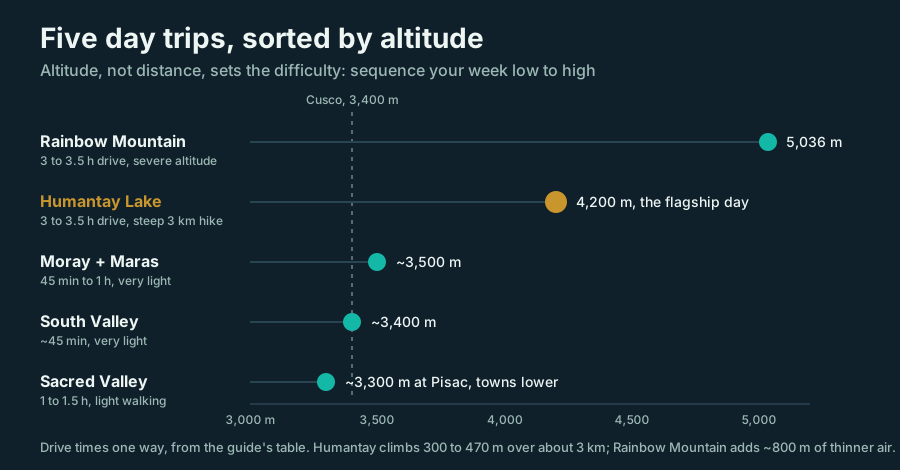
Rankings without numbers are just opinions, so here are the numbers first.
| Day trip | Drive one way | Max altitude | Physical effort | What you get |
|---|---|---|---|---|
| Humantay Lake | ~3-3.5 h | ~4,200 m | Steep 3 km hike, 300-470 m gain | Glacier-fed turquoise lake under Humantay peak |
| Rainbow Mountain (Vinicunca) | ~3-3.5 h | ~5,036 m+ | ~1.5 h uphill at severe altitude | Striped mineral ridge, big-sky views |
| Sacred Valley (Pisac, Ollantaytambo) | ~1-1.5 h | ~3,300 m at Pisac, towns lower | Light walking on terraces | Two great Inca sites, markets, valley scenery |
| Moray + Maras salt mines | ~45 min-1 h | ~3,500 m plateau | Very light | Circular Inca terraces, thousands of salt ponds |
| South Valley (Tipón, Pikillacta, Andahuaylillas) | ~45 min | ~3,400 m | Very light | Inca waterworks, a pre-Inca city, a famous painted church |
Read that table against your own trip. If you have only one fit, acclimatized day and you want the Andes to show off, the ranking that follows explains why I send people to the lake first. If you land tomorrow, start at the bottom of the altitude column, not the top. My Cusco altitude guide covers that sequencing in detail.
Why does Humantay Lake top the list?
Because it compresses everything people come to Peru's mountains for into one morning: a real trail, a 5,000-metre glacier wall, and water of a colour that looks invented. The effort is honest but brief, the logistics are solved for you, and the payoff does not depend on catching a market day or a clear summit.
I will not pretend to be neutral here, so instead I will be precise. The day runs like this: pickup in Cusco's historic center between 3:30 and 4:00 AM, hot breakfast in Mollepata, then the trailhead at Soraypampa around 3,850 to 3,900 m. The hike climbs roughly 300 to 470 m over about 3 km, most people take 1.5 to 2 hours up, and then the ridge line breaks and the lake is simply there, turquoise under the ice of Humantay peak, which rises past 5,470 m beside the Salkantay massif. You get about an hour at the shore, walk down, and sit for a buffet lunch before the drive home.
What makes it the flagship, against the other four days, is the ratio of effort to reward. The Sacred Valley is beautiful but you experience it mostly through a windscreen and on gentle paths. Rainbow Mountain demands more from your body than many visitors can give in their first week. Humantay sits in between: hard enough that the lake feels won, short enough that a reasonably fit, acclimatized traveller gets there, and there are horses at Soraypampa for anyone who needs the backup, around 80 soles one way, though they stop 15 to 20 minutes short of the shore.
Is Rainbow Mountain worth the extra altitude?
Yes, if you are acclimatized and want the bragging rights of standing above 5,000 m; no, if it is your first high day. The viewpoint sits around 5,036 m, the walk up takes about 1.5 hours from the Cusipata side, and the altitude, not the distance, is what turns people around.
Vinicunca earns its fame. The striped ridge really is that strange in person, bands of rust, cream and green mineral running across a treeless mountain, and on a clear morning you can see the ice of Ausangate hanging in the distance. The current standard route from the Cusipata side is about 3 to 4 km one way, an hour and a half of steady climbing for most walkers, with the entrance fee for foreigners around 25 soles and roughly the same 3 to 3.5 hour drive as Humantay, just in the opposite direction.
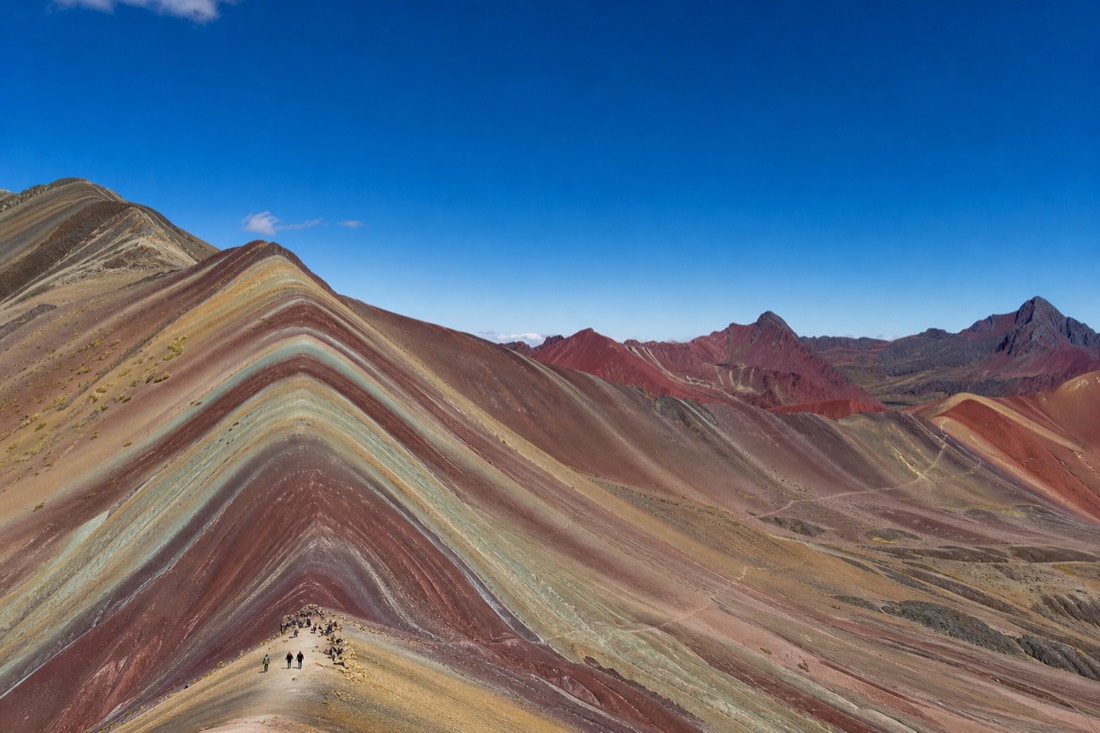
The catch is oxygen. The viewpoint stands roughly 800 m higher than Humantay Lake, and that difference is not a detail, it is the whole difficulty. I meet travellers who did Rainbow Mountain on day two of their trip and remember mostly the headache. Save it for the back half of your week, after your body has done its adaptation work. If you are choosing between the two big hikes, I wrote a full head-to-head in Humantay versus Rainbow Mountain that goes deeper than this section can.
One more honest note: the colours photograph best bone dry. In the wet months the stripes darken and snow can cover them entirely, so Rainbow Mountain is even more season-sensitive than the lake.
What does a Sacred Valley day actually give you?
The best culture-per-effort ratio in the region: Pisac's hillside citadel and market, Ollantaytambo's massive terraced fortress, and a valley floor that sits usefully lower than Cusco. It is the right day for arrival-week legs, and the ruins need the Boleto Turístico, the region's combined entrance ticket.
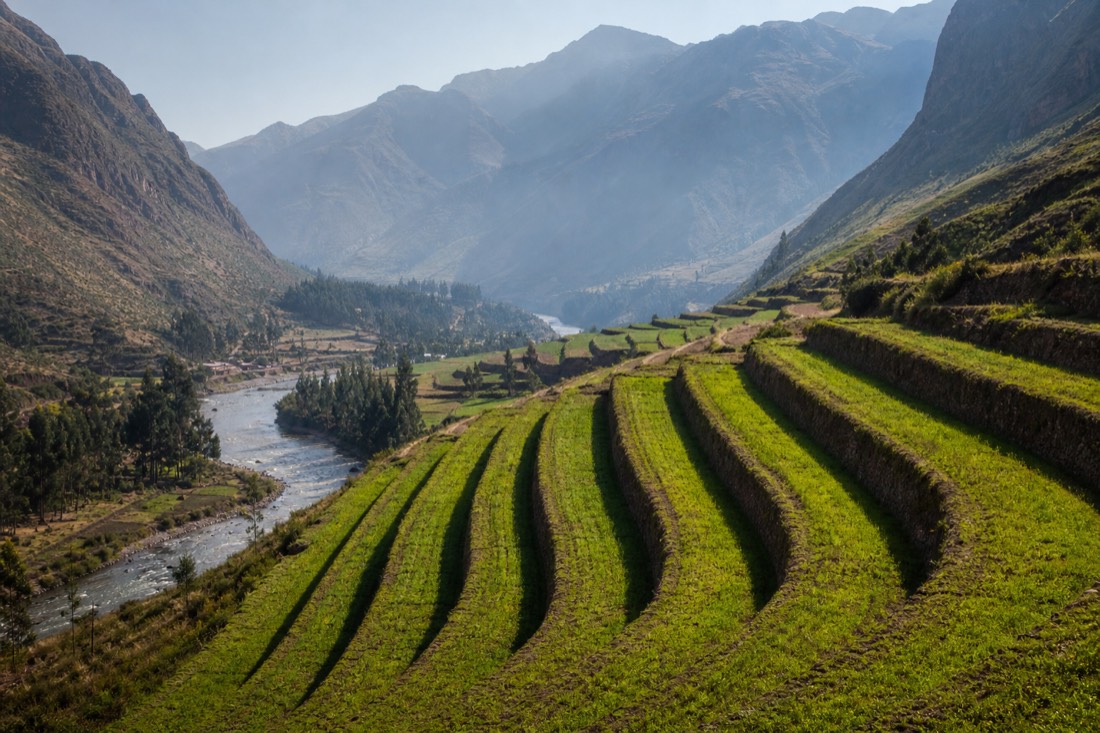
The Sacred Valley of the Urubamba runs about an hour north of Cusco, and its two anchor sites would each justify the drive alone. Pisac stacks terraces up a mountainside toward a ridgetop sun temple, with the famous artisan market in the town below. Ollantaytambo, at the valley's far end, is the rare place where you climb an Inca fortress and then walk streets the Incas themselves laid out, still lived-in and running with water channels. The town sits at roughly 2,800 m, noticeably below Cusco, which is why hoteliers and doctors alike suggest the valley for your gentlest days.
Entry to the archaeological sites works through the Boleto Turístico, the combined tourist ticket. The full ticket currently runs 130 soles and covers sites across the region for ten days, while partial circuit versions cost 70 soles, per the current ticket guide. Standard valley tours handle the stops and timing; independent travellers can do it by taxi and colectivo with a little patience.
Tickets are the one piece of admin that differs trip by trip, so here is how they split.
| Day trip | How entry works | Recent cost | Handled by tours? |
|---|---|---|---|
| Humantay Lake | Community fee at the Mollepata/Soraypampa checkpoint | 10-20 soles, occasionally reported higher | Usually, the featured tour handles it |
| Rainbow Mountain | Community entrance at the trailhead | ~25 soles for foreigners | Often paid on site |
| Pisac + Ollantaytambo | Boleto Turístico, full or partial circuit | 130 soles full (10 days), 70 partial | Rarely included, buy separately |
| Moray | Covered by the Boleto Turístico | Included in the ticket above | Same ticket |
| Maras salt mines | Own community entrance, not on the boleto | 10-20 soles | Sometimes included, check |
These community fees move around from season to season, so treat the numbers as recent rather than fixed and carry small soles in cash either way.
Strategically, this is the perfect day two or three. You see world-class sites, you spend hours below Cusco's altitude while your blood adjusts, and you save your hiking legs. The valley sets up the mountain days rather than competing with them.
Are Moray and the Maras salt mines worth half a day?
Absolutely, and half a day is genuinely all they need. Moray's concentric crop terraces and the several thousand shimmering salt ponds at Maras sit under an hour from Cusco on the same plateau, with light walking, a roughly 10 to 20 soles entrance at the salt mines, and some of the best photographs in the region.
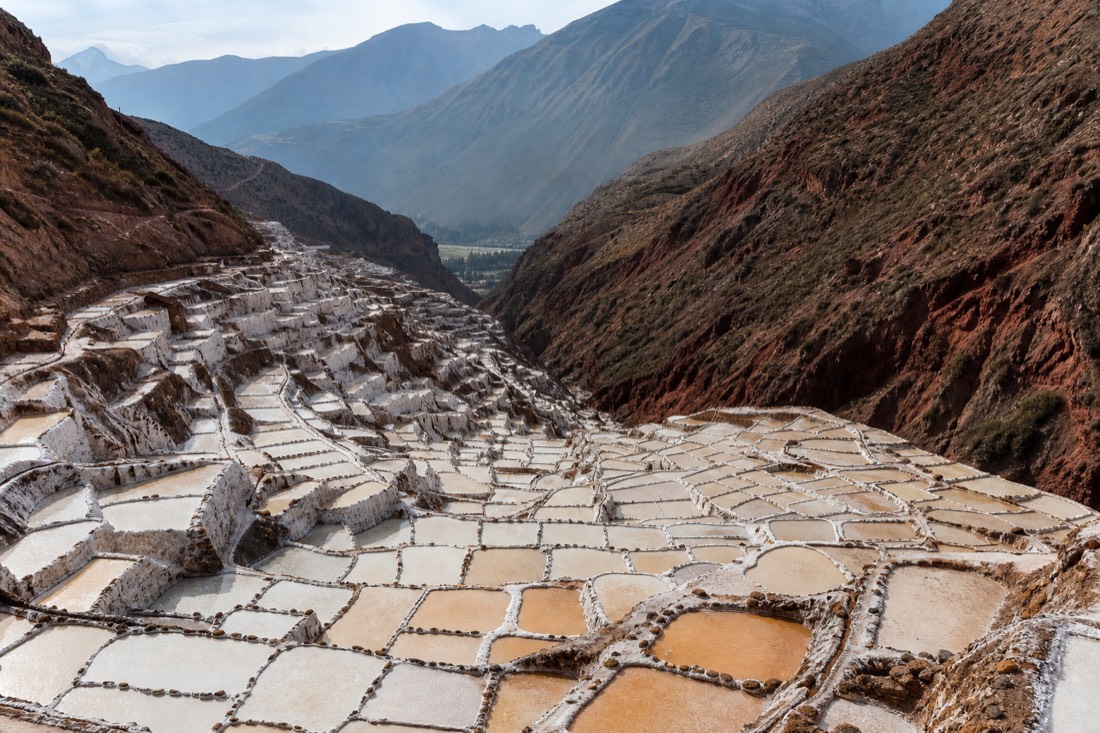
These two are the region's great efficiency play. Moray looks like nothing else the Incas built: enormous circular terraces sunk into the earth like an amphitheatre, most convincingly explained as an agricultural laboratory where each level's microclimate tested different crops. Twenty minutes away, the Maras salinera spills roughly three thousand salt evaporation ponds down a hillside at about 3,380 m, worked by local families since before the Incas, and the terraced white-and-copper patchwork is astonishing in low light. Moray sits on the Boleto Turístico; Maras charges its own small community entrance, recently 10 to 20 soles.
The drive from Cusco takes 45 minutes to an hour across the Chinchero plateau, itself worth the window seat. Effort is minimal, a few staircases and level paths. Combined tours run mornings and afternoons, and the afternoon light on the salt ponds is the photographer's pick. This is the day I recommend to families with mixed energy levels, to anyone nursing sore legs after the lake, and to travellers with a spare half day before a flight.
What about the South Valley, and how do you fit it all in one week?
The South Valley is the quiet one: Tipón's flowing Inca water gardens, the sprawling pre-Inca city of Pikillacta, and the painted church at Andahuaylillas, all within an hour of Cusco and blissfully short on crowds. In a week, sequence low days first, Humantay mid-week, and the 5,000-metre stuff last.
The South Valley never headlines anyone's trip and always overdelivers. Tipón is Inca hydraulic engineering still running, spring water channelled through stone terraces that have flowed for five centuries. Pikillacta is older than the Incas entirely, a huge grid-planned Wari city. And the modest village church of San Pedro Apóstol in Andahuaylillas hides a baroque interior so dense with murals and gold leaf that people call it the Sistine Chapel of the Andes. You will share these places with school groups and pigeons, not queues.
Here is how I would stack a Cusco week that ends with strong legs and no wasted mornings.
| Day | Trip | Why this order |
|---|---|---|
| 1 | Arrive Cusco, historic center only | Let the body meet 3,400 m gently |
| 2 | Sacred Valley (Pisac, Ollantaytambo) | Big sights at lower altitude |
| 3 | Moray + Maras, or South Valley | Light effort, keeps acclimatizing |
| 4 | Humantay Lake | Acclimatized, fresh legs, flagship day |
| 5 | Rainbow Mountain, or rest before Machu Picchu | Highest altitude last |
Ranked honestly, then: Humantay for the day you will still talk about in ten years, Rainbow Mountain for the acclimatized rematch, the Sacred Valley for arrival week, Moray and Maras for the spare half day, the South Valley for the traveller who likes rooms without crowds in them. Cusco is generous like that. Pick in the right order and you do not have to choose at all.
How do you match a day trip to the day you actually have?
Sort by what the day is for, not by fame. An arrival-day body wants the low Sacred Valley or a short Moray and Maras loop. One fit, acclimatized day belongs to Humantay. A spare half day is Moray and Maras. A photography priority points to salt-pond afternoons or a dry-season Rainbow Mountain. The right day trip is the one that fits your legs and your calendar.
The mistake I see is picking by reputation and paying for it with a wasted morning or a ruined one. Rainbow Mountain is the famous name, so people book it for day two and spend it fighting a headache above 5,000 m. Humantay is the flagship, yet on tired arrival legs it is a slog. Match the day to your state instead, and every trip lands better. Here is the quick sort I run through with visitors over breakfast.
| Your situation | The day I would pick | Why |
|---|---|---|
| Just landed, day 1 or 2 | Sacred Valley, or Moray and Maras | Low altitude, light effort while you adapt |
| One fit, acclimatized day | Humantay Lake | The full hike-and-glacier payoff |
| Half a day free | Moray and Maras | Under an hour out, huge on photos, light on the legs |
| Photography is the point | Maras salt ponds, or dry-season Rainbow Mountain | Best light and colour when conditions cooperate |
| Sore legs or mixed energy | South Valley, or Moray and Maras | Quiet, level, and still world-class sites |
Read that against the altitude column from the comparison table higher up. The pattern is always the same: early days low, the big hikes once your blood has caught up. Humantay sits in the sweet spot for a mid-week day, hard enough to feel earned, not so high it demands a fully adapted body the way Vinicunca does.
What day-trip mistakes do I watch first-timers make?
Four, over and over: stacking the highest hike too early, arriving with no cash for community fees, underestimating the drive, and treating the 3:30 AM start as optional. Each one is avoidable, and each one quietly wrecks a day that cost real money and a real early alarm.
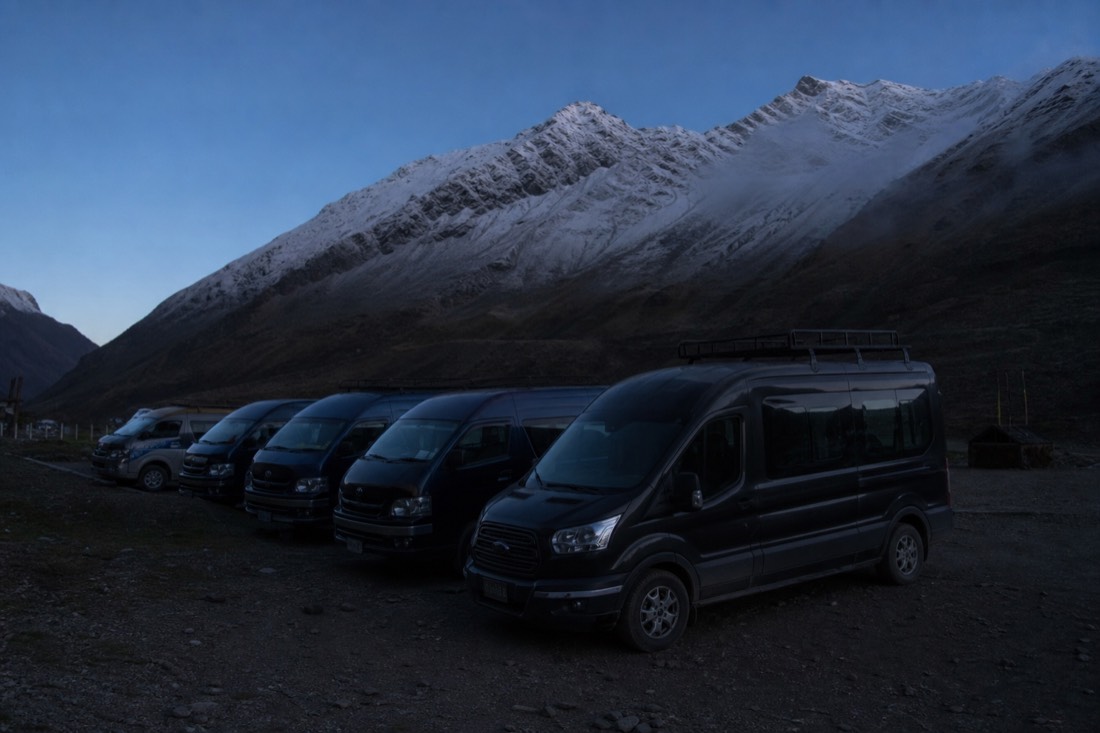
From the front of a van, the patterns repeat. The traveller who booked Rainbow Mountain for day two and turns pale at the viewpoint. The couple who reach the Soraypampa checkpoint with only a card and no soles for the community fee. The family who assumed "day trip" meant a couple of hours each way and were stunned by a three-hour drive on a rough final stretch. And the group who talked their operator into a "reasonable" 6 AM start, then met the cloud and the crowds together at the lake.
| The mistake | What it costs | The fix |
|---|---|---|
| Rainbow Mountain too early | A headache above 5,000 m, no memory of the view | Save it for the back half of the week |
| No cash for community fees | Delays or awkwardness at the checkpoint | Carry small soles notes for the day |
| Underestimating the drive | Shock at a 3-hour each-way transfer | Plan for a full 14-hour door-to-door day |
| Treating the 3:30 AM start as optional | Cloud and crowds at the lake together | Take the earliest departure offered |
The cash one deserves its own line, because it is the most common and the most fixable. Almost every day trip out of Cusco carries a small community or entrance fee paid on site, and several want soles rather than cards. Carry enough small notes for the day and you sail through every checkpoint; my entrance and fee breakdown lists what each charge covers. Here is what a single day out of Cusco actually costs beyond the tour price, so you know what to keep in your pocket.
| Line item | Rough cost (soles) | Notes |
|---|---|---|
| Community or entrance fee | 10-30 | Humantay 10-20, Rainbow ~25, paid on site |
| Horse at Soraypampa | ~80 one way | Optional, stops 15-20 min short of the lake |
| Snacks and extra water | 10-20 | Buy in Cusco or Mollepata, cheaper than on the trail |
| Tips for guide and driver | Your call | Gratuities are not included in tour prices |
| Small cash buffer | 20-40 | Toilets, coffee, the unexpected |
None of these are exotic errors. They are the ordinary result of planning a trip from photos rather than from logistics. The three-hour transfer alone surprises people every week, which my getting there from Cusco guide lays out in full. Get the sequence, the cash and the alarm right, and Cusco's day trips run like clockwork, with Humantay the one you will still be describing years later.
Your next step
Choose your day from Cusco
Match the trip to your plans
General recommendation · confirm your own requirements
Humantay Lake with breakfast and buffet lunch
Have a date in mind? Let one booking cover the ride to Soraypampa, your guide and both meals. Check your departure before arranging the rest of your trip.
12–13.5 hours · Transport, English/Spanish guide, breakfast and buffet lunch, first aid and emergency oxygen. Entrance fee and optional horse are extra, paid locally in cash.
Choose the historic-center pickup option and confirm your hotel; other options use a meeting point. Downtown Cusco drop-off.
A steep high-altitude hike. Not suitable for pregnancy, mobility or respiratory limitations, vertigo or low fitness. A horse does not remove the walking or altitude requirements. Free cancellation until 24 hours before departure.
Affiliate links: we may earn a commission if you book, at no extra cost to you.