Where Should You Stay in Cusco Before the Humantay Hike?
Your hotel choice decides how your 3:30 AM pickup goes and how your body handles night one at 3,400 m. Here is where I actually tell people to sleep.
 Written with Carlos Mamani, Humantay Lake tour guide & high-altitude specialist
Short answer
Stay inside Cusco's historic center, within a few blocks of the Plaza de Armas or in lower San Blas, because Humantay pickups run 3:30 to 4:00 AM from central hotels. Pick a quiet street over a party block, keep night one gentle at 3,400 m, and confirm your reception opens before dawn.
A van idles on a cobbled street at 3:40 in the morning, and somewhere above it a traveller is discovering that their charming guesthouse locks its front door until six. I have watched that scene more than once from the pavement. Where you sleep in Cusco is not a side decision to the Humantay day, it is part of the logistics. The featured tour collects between 3:30 and 4:00 AM from hotels, hostels and homestays in the historic center, and drops you back near the Plaza de Armas in the evening. Stay central and the hardest part of your morning is the alarm. Stay outside the center and you are taking a taxi through a dark city to meet your own pickup.
Booking choice: See the historic-center pickup option before choosing your departure base. Check Humantay Lake dates
Affiliate recommendation · final price and options on GetYourGuide.Why does the historic center matter so much for the pickup?
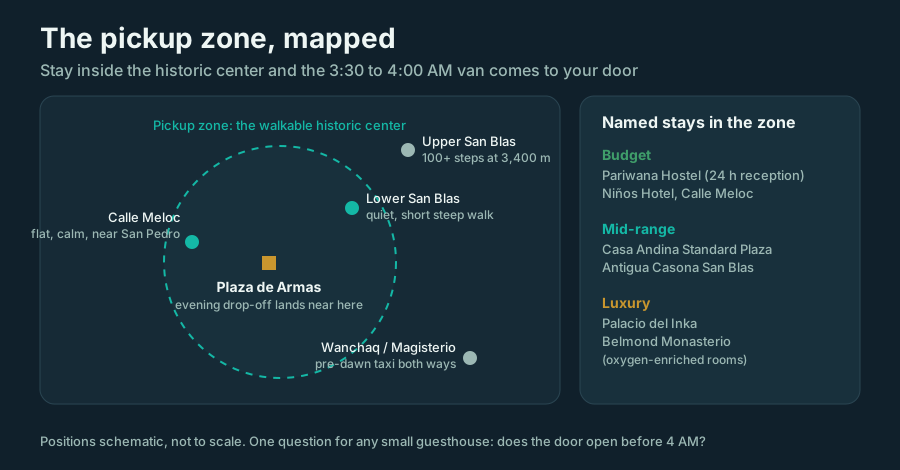
Humantay departures collect passengers from the historic center only, between 3:30 and 4:00 AM, and drop you back near the Plaza de Armas around dinner time. With the hotel-pickup option, confirm collection at your exact property; the return is to downtown Cusco, not your hotel door. Anything further out adds taxis, timing risk, and lost sleep.
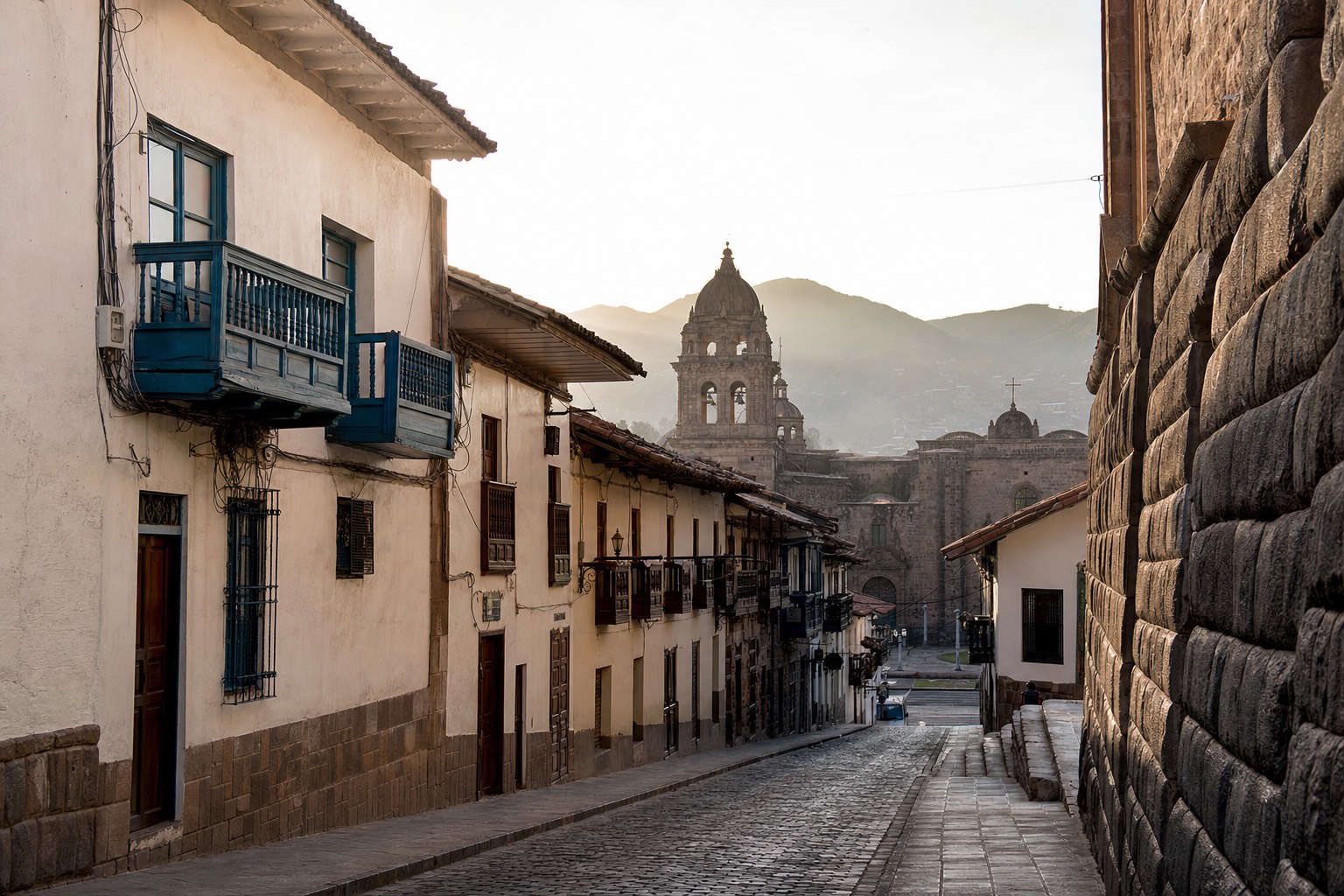
Cusco's historic center is compact, roughly the area you can walk in fifteen minutes around the Plaza de Armas, taking in San Blas on its hill, the streets toward the San Pedro market, and the blocks around Plaza Regocijo. Tour operators route their pre-dawn collection loops through these streets because they are dense with accommodation and close to the highway out of the city. If your hotel sits in Wanchaq or out by the airport, most operators will ask you to meet at a central point instead. At 3:15 AM, with no breakfast in you and taxis scarce, that is a miserable way to open a big day.
The evening matters too. You come off the mountain tired, and the drop-off near the Plaza de Armas or Centro Histórico puts a central guest two blocks from a shower. I walk past people at 7 PM still negotiating a cab to a distant Airbnb, and I always think the same thing: they saved a little on the room and paid for it twice in the dark.
There is a quieter reason to stay central as well. Between the pickup and the return, everything you want in Cusco on your rest days, the cathedral, the museums, the food, sits inside the same few blocks. The center is the city's altitude-friendly zone precisely because you barely need to walk uphill to reach any of it.
Which neighbourhoods actually work best?
The blocks within two or three streets of the Plaza de Armas are the most convenient for pickups and the flattest to walk. Lower San Blas adds charm and quiet for a short steep walk. Upper San Blas and anywhere beyond the center trade convenience away, which matters more than usual when your day starts at 3:30.
| Neighbourhood | Pickup convenience | Character | Watch out for |
|---|---|---|---|
| Plaza de Armas blocks | Confirm property access with the pickup option | Grand, busy, everything close | Bar and nightlife noise on some streets |
| Lower San Blas | Confirm property access with the pickup option | Artisan quarter, quiet, pretty | Short but steep cobbled climbs |
| Upper San Blas | Sometimes a walk-down meeting point | Views, very quiet | Steep stairs are hard work at 3,400 m |
| West of the plaza (Calle Meloc area) | Central, flat; confirm property access | Local, calmer, near San Pedro market | Fewer restaurants at night |
| Outside the center (Wanchaq, Magisterio) | Usually a central meeting point instead | Modern, residential | Pre-dawn taxi both ways |
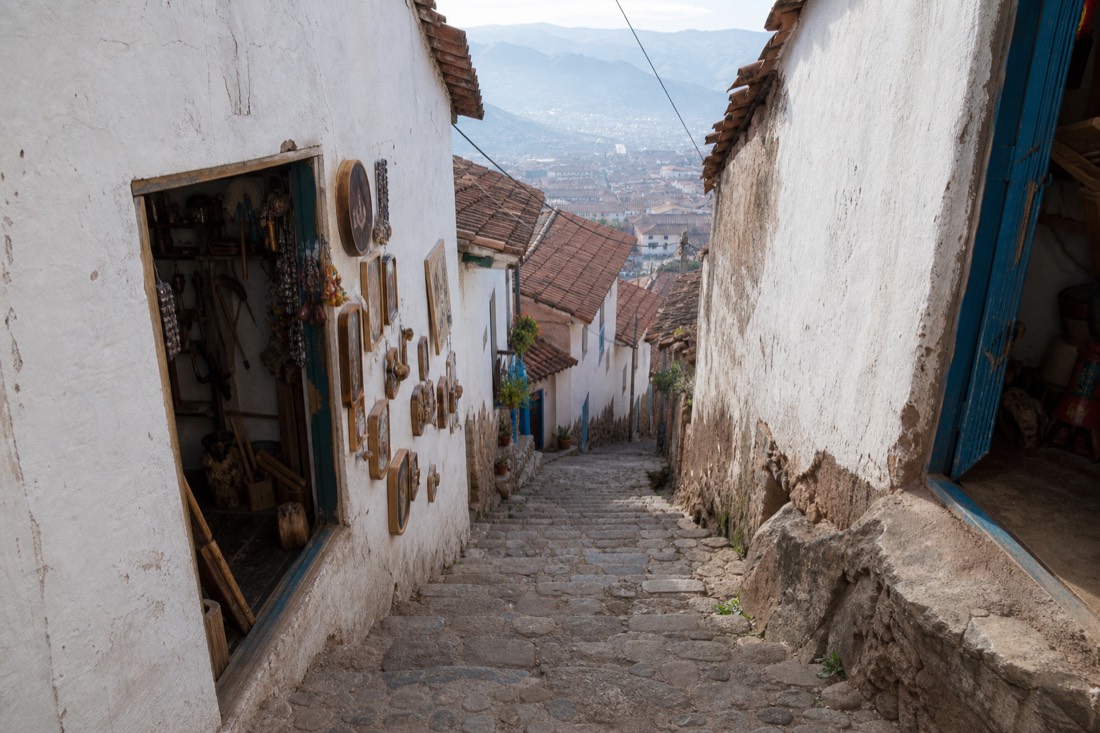
San Blas deserves an honest word. It is the neighbourhood everyone falls for, whitewashed lanes, workshops, café balconies, and I send people there happily. But it climbs. The difference between lower and upper San Blas is a flight of a hundred-plus stone steps, and on your first day at Cusco's altitude of about 3,400 m, documented in the city's profile, those steps will find your lungs. Book lower San Blas if the view is not everything to you.
Which real hotels should you look at, across budgets?
Cusco's center has honest options at every price. Pariwana Hostel and Niños Hotel cover budget beds with real character, Casa Andina Standard Cusco Plaza and Antigua Casona San Blas hold the middle, and Belmond Hotel Monasterio or Palacio del Inka are the city's classic luxury stays. All are central, but confirm access to your exact property with the operator.
These are established, well-known properties I hear about from travellers year after year, all currently operating in the historic center. I have no connection to any of them; they are simply the names that keep proving themselves. Check current details directly, since rooms and policies change.
| Property | Budget tier | Neighbourhood | Why it suits a Humantay morning |
|---|---|---|---|
| Pariwana Hostel Cusco | Budget, social | Historic center | 24-hour reception, used to pre-dawn departures |
| Niños Hotel | Budget guesthouse | Calle Meloc, west of the plaza | Quiet street, profits fund a children's charity |
| Casa Andina Standard Cusco Plaza | Mid-range | Near Plaza de Armas | Flat walk, reliable early wake-up handling |
| Antigua Casona San Blas | Upper mid, boutique | San Blas | Calm courtyard rooms away from nightlife |
| Palacio del Inka, a Luxury Collection Hotel | Luxury | Historic center, near the plaza | Full-service desk at any hour |
| Belmond Hotel Monasterio | Luxury | Plaza de las Nazarenas | A restored monastery, oxygen-enriched rooms available |
Two notes from the pickup side of things. Hostels like Pariwana are genuinely good at 3:30 AM, because someone is always awake and the driver knows the door. Small guesthouses are lovelier to live in but sometimes lock up overnight, so the single question to ask any small property is whether reception, or at least the door, works before 4 AM. Ask it when you book, not the night before.
The luxury tier earns its keep on arrival day more than departure day. A hotel like the Monasterio pumping supplemental oxygen into rooms is not a gimmick at this elevation; easing your first nights makes the whole trip better, and it sets up the hike. For how the acclimatization piece fits together, my Cusco altitude guide walks through the first 48 hours in detail.
Once the bed is booked, lock in the mountain.
What makes a hotel altitude-friendly on your first night?
Location that spares your legs, a hard no on the first-night pisco, and easy access to water, mate de coca and rest. Cusco sits near 3,400 m, most visitors feel it within the first 12 hours, and a hotel on a flat street with a kettle in the room does more for you than any souvenir remedy.
Altitude does not care how nice your room is, but the room can still help. The pattern I see constantly: someone lands at 11 AM, checks into a gorgeous place at the top of San Blas, climbs the stairs twice with luggage, celebrates with a heavy dinner and two drinks, and spends day two horizontal. Acute mountain sickness affects a large share of travellers who fly straight into this elevation, and the CDC's altitude illness guidance is blunt about the fix: take it slowly, hydrate, avoid alcohol early, and give symptoms time before you push higher. Travellers who reach Cusco overland instead, on a network like Peru Hop (check prices here), usually skip this pattern entirely: by the time they check in, several days of gradual altitude gain are already behind them.
So the altitude-friendly checklist for a Cusco hotel is short. Flat approach from the street, or at most one gentle slope. Hot water and a kettle, because you will drink far more tea and water than usual. Breakfast that starts early, or a packed option. Heating or thick blankets, since dry-season nights drop near freezing and cold rooms wreck the deep sleep your body needs to adapt. Most of the properties in the table above tick these boxes; the point is to check them wherever you book.
Night one sets the tone. Sleep low in the room-choice sense too: if a hotel offers rooms off the street versus over the bar, take the quiet one and let your body do its work.
How do you trade noise against location?
The closer to the Plaza de Armas, the shorter every walk and the louder the weekends. San Blas and the streets west of the plaza sleep better. Since your Humantay night ends at 3:00 AM, a quiet Tuesday matters more than a lively Saturday, so pick the calm street and walk the extra three minutes.
Cusco's nightlife concentrates on a few streets fanning off the main plaza, and the bars run late into the weekend. A plaza-view balcony room sounds romantic until you are trying to sleep at 9 PM before a 3:15 alarm. This is the one night of your trip where boring wins.
| Priority | Best choice | Accept in return |
|---|---|---|
| Silence before the hike | Lower San Blas or Calle Meloc area | A few minutes' extra walk to the plaza |
| Shortest possible walks | Blocks beside the Plaza de Armas | Weekend noise, ask for an interior room |
| Social atmosphere | Hostel near the center | Earplugs are not optional |
| First-night comfort at altitude | Flat-street mid-range or luxury | Higher rate |
My honest playbook, the same one I give friends: spend your acclimatization nights wherever charms you most, then make sure the night before the hike is your quietest room, earliest dinner, and emptiest glass. Lay out your daypack before bed using my packing list so the 3 AM version of you only has to dress and walk downstairs. The van does the rest.
Book the bed for the neighbourhood, book the quiet for the hike, and let the historic center do what it does best: put everything, including your 3:40 AM van, a few steps from your door.
How early should the night before the hike really start?
Work backwards from a 3:30 AM lobby call and the night is shorter than it looks. Dinner by seven, daypack laid out by nine, lights off before ten, and a 3:00 AM alarm still buys only five hours of sleep. The travellers who struggle most are the ones who treat the pickup like a normal early start rather than a night cut in half.
The pickup window runs 3:30 to 4:00 AM, and the van does not wait long on a dark street. That single fact should shape your whole evening. I have watched people stroll in from dinner at ten, still packing at eleven, then stand grey in the lobby at 3:25 having slept barely three hours before a fourteen-hour day at altitude. It does not have to go that way. Reverse-engineer the morning and the night organises itself.
| Time the night before | Do this | Why it matters |
|---|---|---|
| By 7:00 PM | Early, light dinner near your hotel | Digestion is slow at altitude; heavy late meals wreck sleep |
| By 8:30 PM | Confirm pickup time and door hours at reception | Someone must be awake to let the driver in |
| By 9:00 PM | Lay out the full daypack, boots, layers, water | The 3 AM you should only have to dress |
| By 10:00 PM | Lights off, no last drink | Even five hours beats three; no alcohol before altitude |
| 3:00 AM | Alarm, dress in the pre-set layers | Warm base layer plus a jacket you can shed |
| 3:30-4:00 AM | In the lobby, ready | The van runs a tight collection loop |
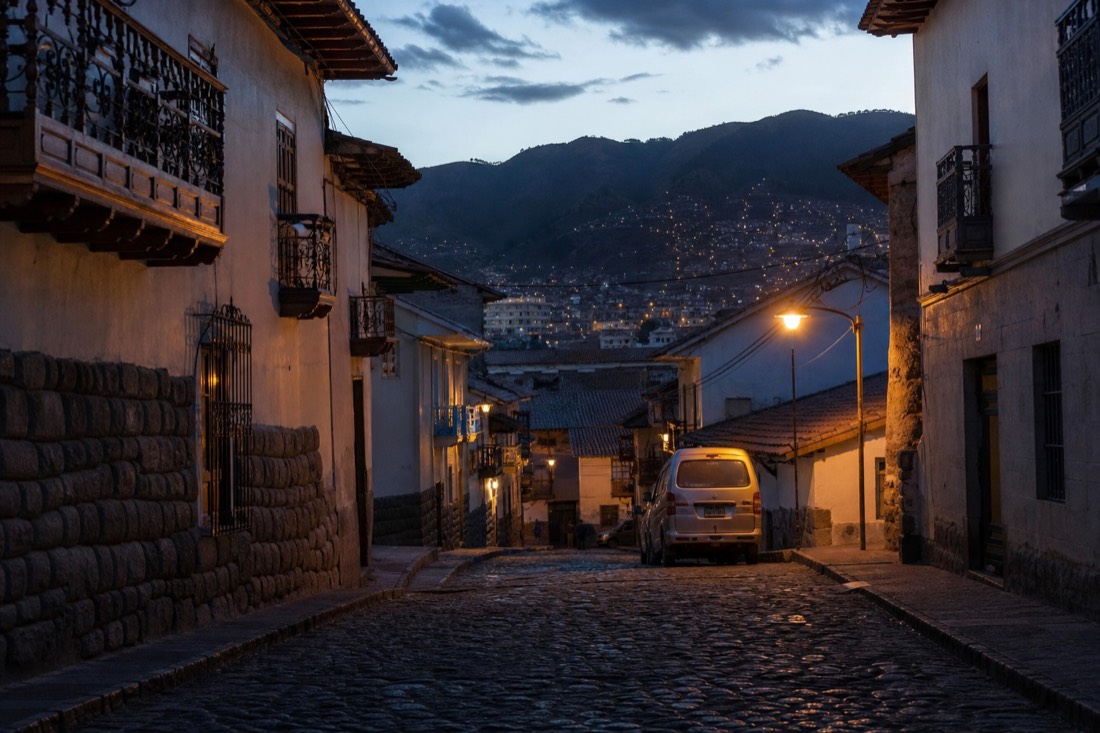
Two details save the most grief. Lay the daypack out fully the night before, boots by the door, layers stacked in order, water filled, so the 3 AM version of you only has to dress. And tell the front desk your exact pickup time when you check in, not the night before, so someone is awake to open the door and point the driver to your room. Small guesthouses are the ones that catch people out here, which is why the door-hours question matters as much as the room itself.
One more thing no hotel breakfast can solve: you leave before it is served. Even the earliest kitchens in Cusco open around six, and you will be an hour up the road by then, which is exactly why the featured departure builds in a hot breakfast at Mollepata. Keep a banana and a couple of biscuits in your daypack for the van regardless. A body climbing to 4,200 m on nothing but adrenaline is a body that fades on the switchbacks. Central hotels earn their keep at the far end of the day too, when you come off the mountain near seven in the evening, wrung out and hungry, and the drop-off near the Plaza de Armas means a meal and a bed within a couple of blocks rather than another taxi in the dark.
The morning is functional, not cruel. That absurdly early start exists to get you on the trail before the cloud builds and the crowds arrive. Sleep is the only thing in short supply, so protect it.
Where do I actually send friends who ask me directly?
Lower San Blas or the flat streets a couple of blocks off the Plaza de Armas, almost every time. Close enough that the van reaches the door, quiet enough to sleep, gentle enough on the legs that first night at 3,400 m. I save the upper-San-Blas views and the plaza-balcony rooms for people who are not hiking the next morning.
Friends get my honest version, which is less romantic than the guidebooks. The neighbourhood that photographs best is upper San Blas, all views and whitewashed lanes, and it is exactly the one I steer hikers away from, because those hundred-plus stone steps are brutal on a body that landed yesterday. The neighbourhood that actually serves a Humantay morning is the flat, boring, central few blocks where the van comes to you and the walk to a late dinner stays level.
| If you are | Best base | The trade you accept |
|---|---|---|
| Solo or budget, want company | Hostel a couple of blocks off the plaza | Weekend noise; pack earplugs |
| A couple wanting charm and quiet | Lower San Blas | A short steep walk up to your door |
| A family or anyone altitude-sensitive | Flat mid-range near the plaza | Less character, far easier on the legs |
| After full comfort on arrival | Luxury tier in the centre | Higher rate for oxygen and service |
| Tempted by the view | Upper San Blas, only if not hiking next day | Stairs that feel doubled at 3,400 m |
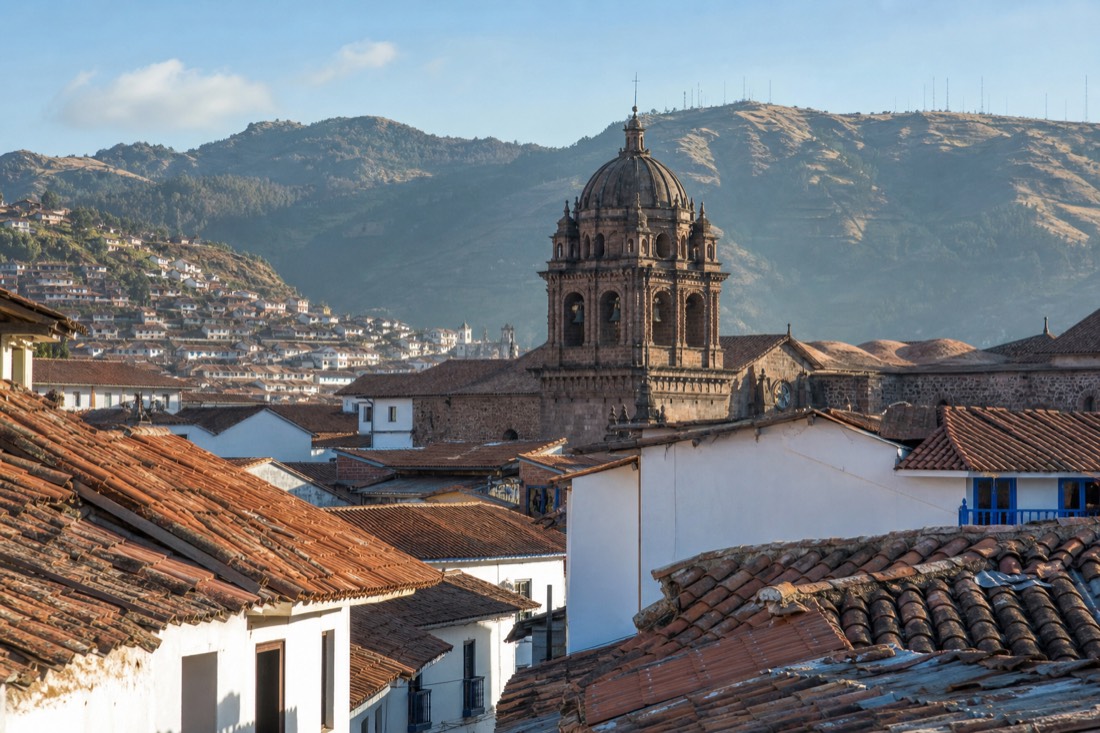
The one variable I weigh above charm is the first-night altitude load, and the room can quietly help or hurt. A flat approach from the street, a kettle for the endless tea and water your body now wants, heating against the near-freezing dry-season nights, and a bed off the bar rather than over it. None of that is luxury, it is sleep protection, and sleep is where your body does its adjusting. Here is the short checklist I run through for anyone booking their first Cusco night.
| Feature to check | Why it helps at altitude | How to confirm |
|---|---|---|
| Flat or one-slope approach | Spares your lungs on night one | Ask the exact walk from the nearest taxi drop |
| Kettle or hot water in room | You will drink far more tea and water | Check the room amenities before booking |
| Heating or thick blankets | Dry-season nights fall near freezing | Read recent reviews for "cold room" flags |
| Reception or door open before 4 AM | The pickup will not wait | Ask directly, in writing, when you book |
| Room away from the street bar | Protects the sleep that adapts you | Request an interior or courtyard room |
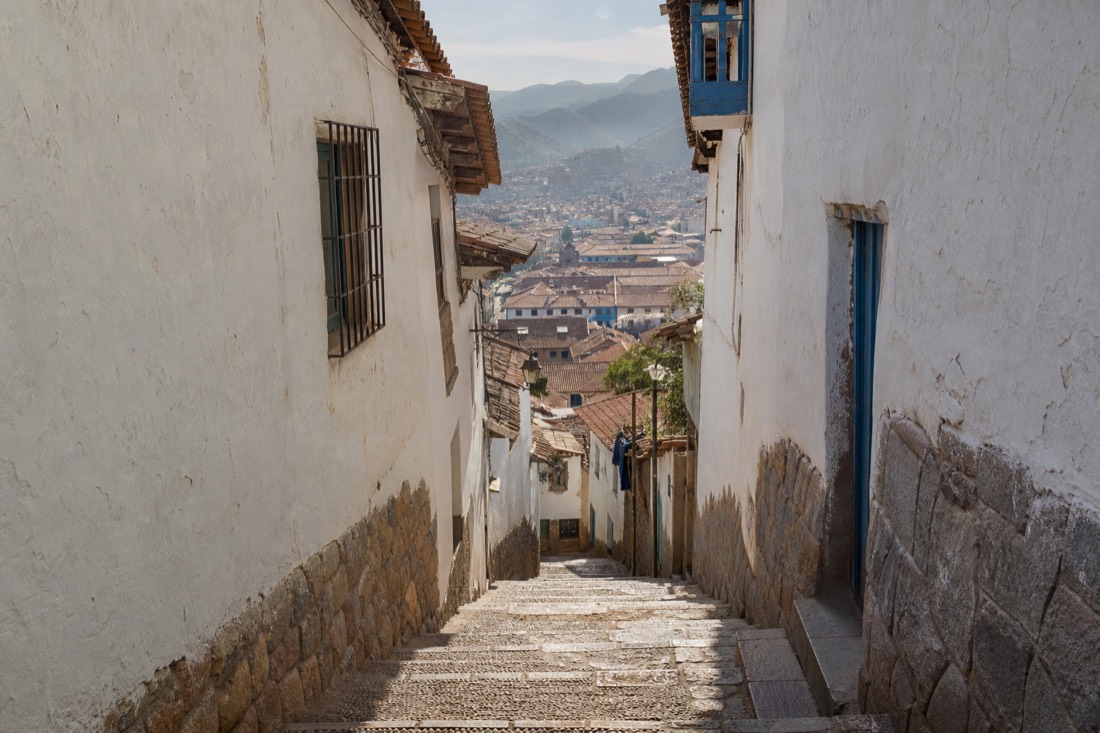
Names change, streets do not. The properties I list above, from Pariwana's hostel beds to the Monasterio's oxygen-enriched rooms, all sit inside this same walkable core, so pick the tier that fits your budget and let the neighbourhood do the heavy lifting. For how those first two days set up the climb itself, my Cusco altitude guide walks through the acclimatization plan hour by hour.
Your next step
Choose your day from Cusco
Match the trip to your plans
General recommendation · confirm your own requirements
Humantay Lake with breakfast and buffet lunch
Have a date in mind? Let one booking cover the ride to Soraypampa, your guide and both meals. Check your departure before arranging the rest of your trip.
12–13.5 hours · Transport, English/Spanish guide, breakfast and buffet lunch, first aid and emergency oxygen. Entrance fee and optional horse are extra, paid locally in cash.
Choose the historic-center pickup option and confirm your hotel; other options use a meeting point. Downtown Cusco drop-off.
A steep high-altitude hike. Not suitable for pregnancy, mobility or respiratory limitations, vertigo or low fitness. A horse does not remove the walking or altitude requirements. Free cancellation until 24 hours before departure.
Affiliate links: we may earn a commission if you book, at no extra cost to you.